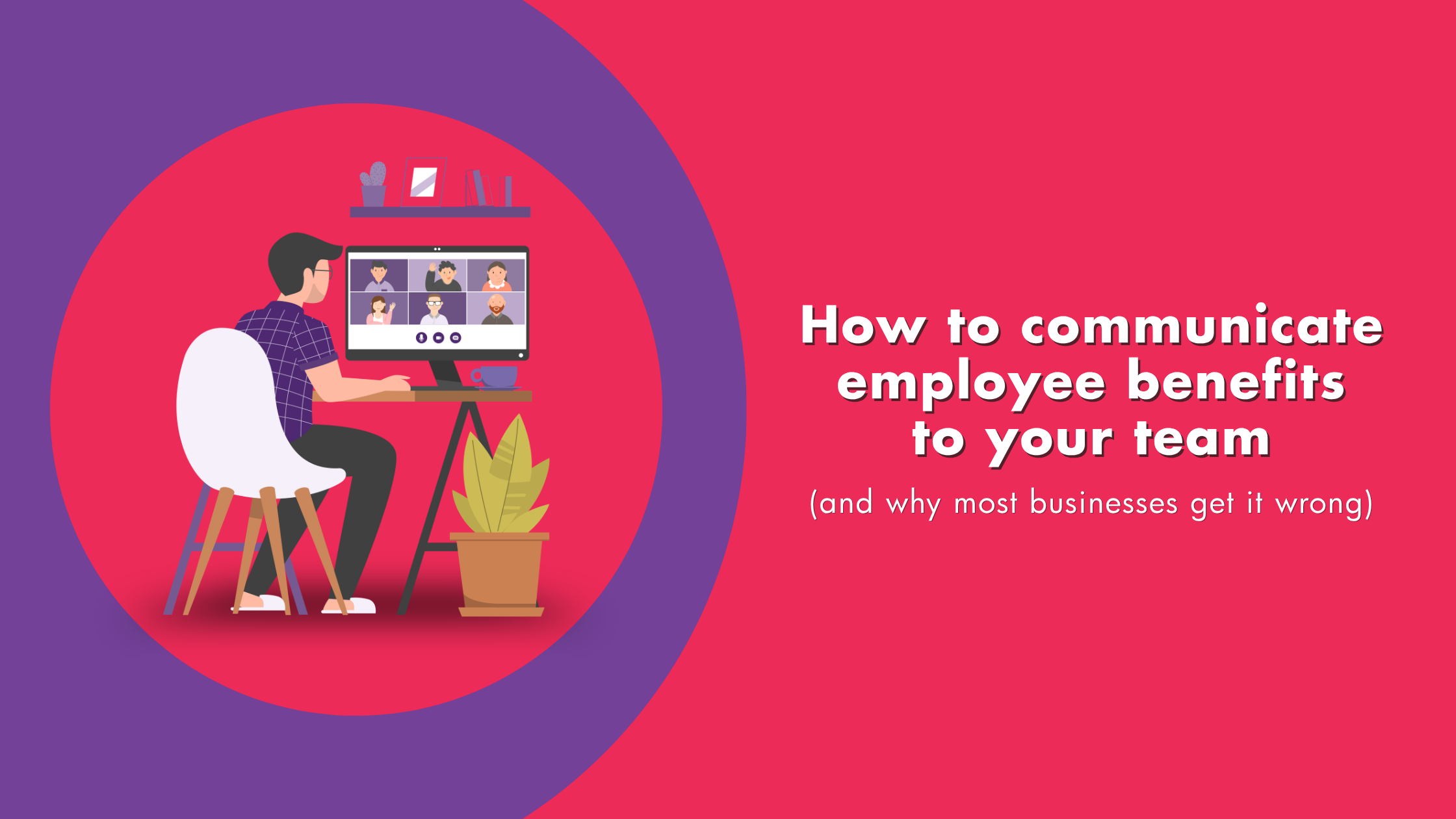
Your business spends real money on employee benefits. Health insurance, life cover, income protection, an EAP. These are valuable things that can make a genuine difference to your employees’ lives. And yet many employees either do not know what benefits they have, or do not know how to use them.
It’s both a missed opportunity and a waste of your investment, and it removes one of the strongest tools you have for attracting and keeping good people.
Need to review your current benefit policies? Our friendly brokers will not only price check your benefits, we’ll also provide free employee onboarding and admin support services if you purchase a policy with us.
- 1 Why benefits communication so often fails
-
2
7 steps to mastering benefits communications
- 2.1 Step 1: Communicate before day one
- 2.2 Step 2: Keep communicating – do not just do it once
- 2.3 Step 3: Use plain English, not insurance jargon
- 2.4 Step 4: Make it personal
- 2.5 Step 5: Show employees what their benefits are worth
- 2.6 Step 6: Brief your managers
- 2.7 Step 7: Review what is actually being used
- 3 How onboarding webinars can transform benefits uptake
- 4 The role of your broker in benefits communication
Why benefits communication so often fails
The most common approach looks something like this: a welcome pack is handed over on day one, a few documents are uploaded to a shared drive, and the subject is never raised again unless someone needs to make a claim and realises they do not know how.
This treats benefits as a tick-box exercise rather than a genuine part of the employee experience. The result is predictable: low awareness, low engagement and low perceived value. Employees who do not understand their benefits do not appreciate them, and they will not mention them when a friend is weighing up a job offer elsewhere.
According to Gallup, poor workplace communication costs British businesses £257 billion each year. Let’s ensure employee benefits comms are not part of the problem.
7 steps to mastering benefits communications
Step 1: Communicate before day one
Benefits communication should start when you make a job offer. The benefits package should be clearly set out alongside the salary. A simple one-page summary, written in plain English, can add real perceived value to the offer without costing anything extra.
At induction, go beyond handing over a document. Walk new employees through the benefits in person or on a video call. The goal is for every new starter to finish their first week knowing exactly what they have and what to do if they need it.
Practical tip: Create a one-page benefits summary that fits on a single sheet. Include the insurer name, policy number, and the phone number or web portal for each benefit. This is the document your employee will reach for when something goes wrong – this could potentially be on a weekend when no one else is available to help.
Step 2: Keep communicating – do not just do it once
One of the most common mistakes is treating benefits communication as a one-off event. People forget. New joiners need onboarding while existing employees need reminding.
Build benefits into your regular internal communications. A short mention in a monthly newsletter, a dedicated Slack channel for benefits questions, or a quarterly spotlight on one specific benefit are all low-effort approaches that keep benefits top of mind.
Tie communications to relevant events. Mental Health Awareness Week is a natural time to highlight your EAP. The start of a new tax year is a good moment to remind employees about salary sacrifice. Cold and flu season is also a useful time to remind employees how to access health insurance or virtual GP services.
Step 3: Use plain English, not insurance jargon
Insurance language really can get in the way! Terms like moratorium underwriting, deferred period, free cover limit and benefit in kind mean nothing to most people. Translate every benefit into what it means for the employee personally.
Instead of Group Income Protection with a 13-week deferred period and a 60% benefit level, say: if you are too ill to work for more than three months, we will continue to pay you 60% of your salary until you recover.
At Hooray, we provide plain-English benefit summaries for all the policies we arrange. If you are not getting this from your current broker, it is worth asking why. More on what to expect from a broker in our guide to choosing an employee benefits broker.
Step 4: Make it personal
Generic benefits communications are easy to ignore. A 28-year-old with no dependants will respond differently to life insurance messaging than a 45-year-old with a mortgage and two children. A remote employee will have different questions about accessing physiotherapy than someone in your office.
You do not need sophisticated technology to achieve this. It could be a case of categorising your team into two or three groups based on life stage and tailoring your messaging slightly for each. This can help improve engagement.
Step 5: Show employees what their benefits are worth
Most employees significantly underestimate what their employer spends on their benefits package. Making this visible is one of the most effective ways to increase appreciation.
A total reward statement, showing the employee’s salary alongside the employer cost of their benefits, can be genuinely eye-opening. When someone sees that their employer is spending an additional £2,500 to £4,000 per year on their health insurance, life cover and income protection, it changes how they view the relationship.
A simple document sent annually, perhaps as part of a performance review conversation, can achieve this without needing a platform or technology investment.
At Hooray, we do this for our own employees during our annual business review.
Step 6: Brief your managers
Line managers are often the first point of contact when an employee faces a health challenge or personal difficulty. If managers do not know what benefits are available, they cannot signpost people to the right support at the right moment.
A 30-minute briefing for your management team covering what benefits exist, who is eligible and how to access them can have a significant impact on uptake. Managers who are confident discussing benefits create a culture where employees feel comfortable asking for help.
- Brief managers on the EAP, particularly the confidential helpline, so they can refer employees early
- Make sure managers know who to contact at your broker if an employee is approaching long-term absence
- Remind managers that signposting to benefits is part of their role, not a specialist function
Step 7: Review what is actually being used
Most insurers and benefits platforms can provide usage data showing how many employees have accessed the EAP, used the virtual GP service, or made health insurance claims. This data is valuable for understanding what is working.
If uptake is low for a particular benefit, the answer is usually better communication rather than removing it. At Hooray, we often review performance data with our clients as part of an initial review or when considering policy renewals.
How onboarding webinars can transform benefits uptake
Charlie Cousins, Founding Director at Hooray:
Some younger employees might be tempted to opt out of health insurance when they hear it will increase their tax liability. Even if it’s just a tiny amount. What they do not realise is that they are giving up cover worth far more than the tax they are saving. At Hooray, we run onboarding webinars for all our clients so employees understand exactly what they have, why it matters, and what the P11D tax actually means for them in real terms.
The role of your broker in benefits communication
A good employee benefits broker does not just arrange the insurance and step back. They help you communicate the value of what you have put in place. If your current broker is not providing communication materials, employee guides and performance reviews as standard, speak to the Hooray team about what a more proactive service looks like.
Related reading: Staff not interested in their employee benefits? | Is this why your employee benefits are unloved? | What makes a brilliant employee benefits scheme?



![_HPA24 Advice Firm of the Year [YELLOW]](https://hoorayinsurance.co.uk/wp-content/uploads/elementor/thumbs/HPA24-Advice-Firm-of-the-Year-YELLOW-qwfw5zs3ef19fjq6cnwf697rj9gwqbf8o6443qptg0.png "_HPA24 Advice Firm of the Year [YELLOW]")
![_HPA24 Best Small Health Insurance Advice Firm [YELLOW]](https://hoorayinsurance.co.uk/wp-content/uploads/elementor/thumbs/HPA24-Best-Small-Health-Insurance-Advice-Firm-YELLOW-qwfw5yu97kzz3xrji5hslrgaxvljimbic1gmmgr7m8.png "_HPA24 Best Small Health Insurance Advice Firm [YELLOW]")
![_HPA24 Best Sales & Retention Advice Team [YELLOW]](https://hoorayinsurance.co.uk/wp-content/uploads/elementor/thumbs/HPA24-Best-Sales-Retention-Advice-Team-YELLOW-qwfw5yu97kzz3xrji5hslrgaxvljimbic1gmmgr7m8.png "_HPA24 Best Sales & Retention Advice Team [YELLOW]")
![_HPA24 Best Small Protection Advice Firm [YELLOW]](https://hoorayinsurance.co.uk/wp-content/uploads/elementor/thumbs/HPA24-Best-Small-Protection-Advice-Firm-YELLOW-qwfw5zs3ef19fjq6cnwf697rj9gwqbf8o6443qptg0.png "_HPA24 Best Small Protection Advice Firm [YELLOW]")