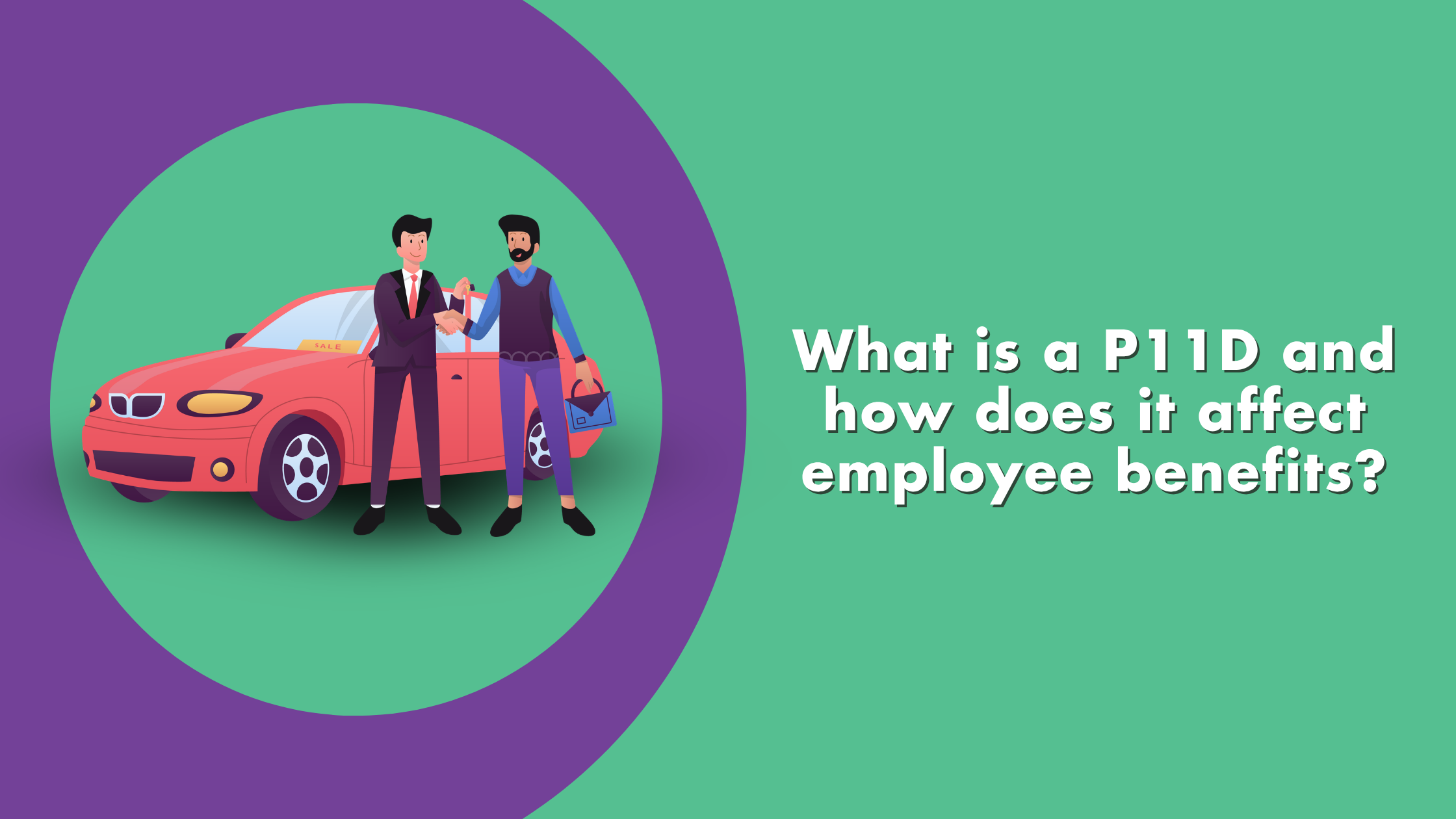
The P11D is about to go extinct, but while it’s still here it’s worth knowing what it is and why it matters.
Essentially, if you provide employee benefits like private health insurance, a company car, or other non-cash perks; then you either need to fill in an annual P11D form or process your benefits through payroll.
But from April 2027, the P11D will be no more and you will have to file your benefits “real time” through payroll. It’s worth reading our recent article which details the changes: Are you ready for monthly Benefits in Kind reporting?
But for now, let’s learn more about the P11D…
What is a P11D?
The P11D form is used by employers to report the cash value of certain employee benefits you provide to employees and directors. This ensures the correct amount of tax is paid on them.
The specific benefits we’re talking about are known as “benefits in kind”, sometimes abbreviated to “BIK”. They are non-cash perks which have a financial value, such as private medical insurance, gym memberships, company cars and certain types of loan.
The P11D tells HMRC the taxable value of these benefits so employees can be taxed correctly on them.
Employers also pay Class 1A National Insurance Contributions on most benefits in kind. For the 2025-26 and 2026-27 tax years, the Class 1A NIC rate is 15%, as confirmed by HMRC..
P11Ds must be submitted to HMRC by 6 July following the end of the tax year. Class 1A NICs must be paid by 22 July if paying electronically, or 19 July if paying by cheque. See HMRC’s P11D guidance for the latest official requirements.
Which employee benefits appear on a P11D?
Business Health Insurance (PMI)
As mentioned, private medical insurance premiums paid by the employer are a benefit in kind and must be reported on the P11D.
Policy claims have no bearing on its taxable value, it’s simply based on the amount you pay upfront as an employer – i.e. the premium.
The employee pays income tax on this amount and you pay Class 1A NICs at 15% for 2025-26 and 2026-27.
Despite the tax cost, Business Health Insurance remains highly valued by employees because the benefit is typically worth considerably more than the tax they pay on it.
“Younger staff in particular can get spooked when they find out they will be taxed more for receiving a group PMI policy. But the amount is so small, especially when compared to the value of the policy itself. This is why at Hooray, we run onboarding webinars for every client so their employees understand what the P11D means. Of course, we’ll also explain what they are getting with the policy and why opting out would probably not be the best idea!”
– Charlie Cousins, Founding Director at Hooray Health & Protection
Group Income Protection
Employer-paid Group Income Protection premiums are generally not treated as a benefit in kind. I.e. employees do not pay tax on the premiums. But should an employee suffer a sickness absence and make a claim on the policy, then the benefit payment they receive will be treated as employment income and subject to PAYE and NICs through the normal payroll process.
Group Life Insurance (Death In Service)
Good news here… Employer-paid Group Life Insurance premiums written under a qualifying discretionary trust are generally not treated as a benefit in kind. Employees do not pay tax on the premiums. Also, the lump sum paid to beneficiaries on death is generally free of income tax.
You can learn more Group Life Insurance and how it’s affected by changes in inheritance tax rules by reading our article on Group Life trust structures.
Dental and optical cover
Not so lucky here… Employer-paid dental and optical insurance is generally treated as a benefit in kind and should be reported on the P11D or through payroll. Check your specific policy and confirm with your accountant.
What is a P11D(b)?
The P11D(b) is the form you send to HMRC detailing the total Class 1A NICs owed across all your P11Ds. Your payroll provider or accountant will manage this as part of year-end processing.
Payrolling benefits in kind
Employers can currently choose to run certain benefits in kind through payroll, which means tax is collected through payroll rather than the benefit being reported to employees on a P11D after year end.
In fact, this will become mandatory in April 2027 – so you need to move to this method asap!
It’s best to speak to your accountant about payrolling benefits. It’s also worth reading HMRC’s payrolling guidance for current requirements.
How does P11D affect your employees?
When a benefit in kind is reported on a P11D, it increases the employee’s taxable income. HMRC typically adjusts the employee’s tax code in the following tax year so they pay the missing tax.
Your employees might be puzzled when they see their tax code has changed. This is why it’s so important to tell your staff in advance! We always make sure that these things are explained to your staff if you buy benefits through us. We’ll ensure they understand the value they are getting in comparison to the tiny amount of extra tax they pay.
Does having employee benefits increase your employer NIC bill?
Yes, in most cases. For 2025-26 you pay Class 1A NICs at 15% on the taxable value of benefits in kind. On a health insurance premium of £1,000 per employee, for example, you would pay £150 in Class 1A NICs in addition to the premium itself. This is worth factoring in when budgeting for employee benefits.
Frequently asked questions
Does private medical insurance go on a P11D?
Yes. Employer-paid private medical insurance premiums are a benefit in kind and must be reported on a P11D or via payroll (from April 2027 it must be through payroll). The taxable value is the employer’s premium cost, not the value of any claims. Employees pay income tax on this amount and employers pay Class 1A NICs at 15% for 2025-26.
Is Group Income Protection a benefit in kind?
No, in most cases. Employer-paid Group Income Protection premiums are generally not treated as a benefit in kind, so they do not appear on a P11D. However, when payments are made to an employee during a claim, those payments are treated as employment income and taxed through PAYE in the usual way.
Do employees pay tax on Group Life Insurance?
In most cases, no. Employer-paid Group Life Insurance premiums written under a qualifying discretionary trust are generally not treated as a benefit in kind. The lump sum paid to beneficiaries on death is also generally free of income tax. Always confirm the specific tax treatment of your scheme with a qualified adviser.
How Hooray can help
At Hooray, we are employee benefits experts, not tax advisers. But what we can make sure you understand the general tax treatment of the benefits we arrange, and flag areas where you should speak to your accountant. We’ll also ensure policies are structured correctly from the outset.
As standard, we also run onboarding webinars for every client so their employees understand their benefits, including the P11D, before confusion sets in. If you have questions about setting up employee benefits for your business, speak to our team.
Related reading: Group life insurance trust structure | What is a benefit in kind?


![_HPA24 Advice Firm of the Year [YELLOW]](https://hoorayinsurance.co.uk/wp-content/uploads/elementor/thumbs/HPA24-Advice-Firm-of-the-Year-YELLOW-qwfw5zs3ef19fjq6cnwf697rj9gwqbf8o6443qptg0.png "_HPA24 Advice Firm of the Year [YELLOW]")
![_HPA24 Best Small Health Insurance Advice Firm [YELLOW]](https://hoorayinsurance.co.uk/wp-content/uploads/elementor/thumbs/HPA24-Best-Small-Health-Insurance-Advice-Firm-YELLOW-qwfw5yu97kzz3xrji5hslrgaxvljimbic1gmmgr7m8.png "_HPA24 Best Small Health Insurance Advice Firm [YELLOW]")
![_HPA24 Best Sales & Retention Advice Team [YELLOW]](https://hoorayinsurance.co.uk/wp-content/uploads/elementor/thumbs/HPA24-Best-Sales-Retention-Advice-Team-YELLOW-qwfw5yu97kzz3xrji5hslrgaxvljimbic1gmmgr7m8.png "_HPA24 Best Sales & Retention Advice Team [YELLOW]")
![_HPA24 Best Small Protection Advice Firm [YELLOW]](https://hoorayinsurance.co.uk/wp-content/uploads/elementor/thumbs/HPA24-Best-Small-Protection-Advice-Firm-YELLOW-qwfw5zs3ef19fjq6cnwf697rj9gwqbf8o6443qptg0.png "_HPA24 Best Small Protection Advice Firm [YELLOW]")