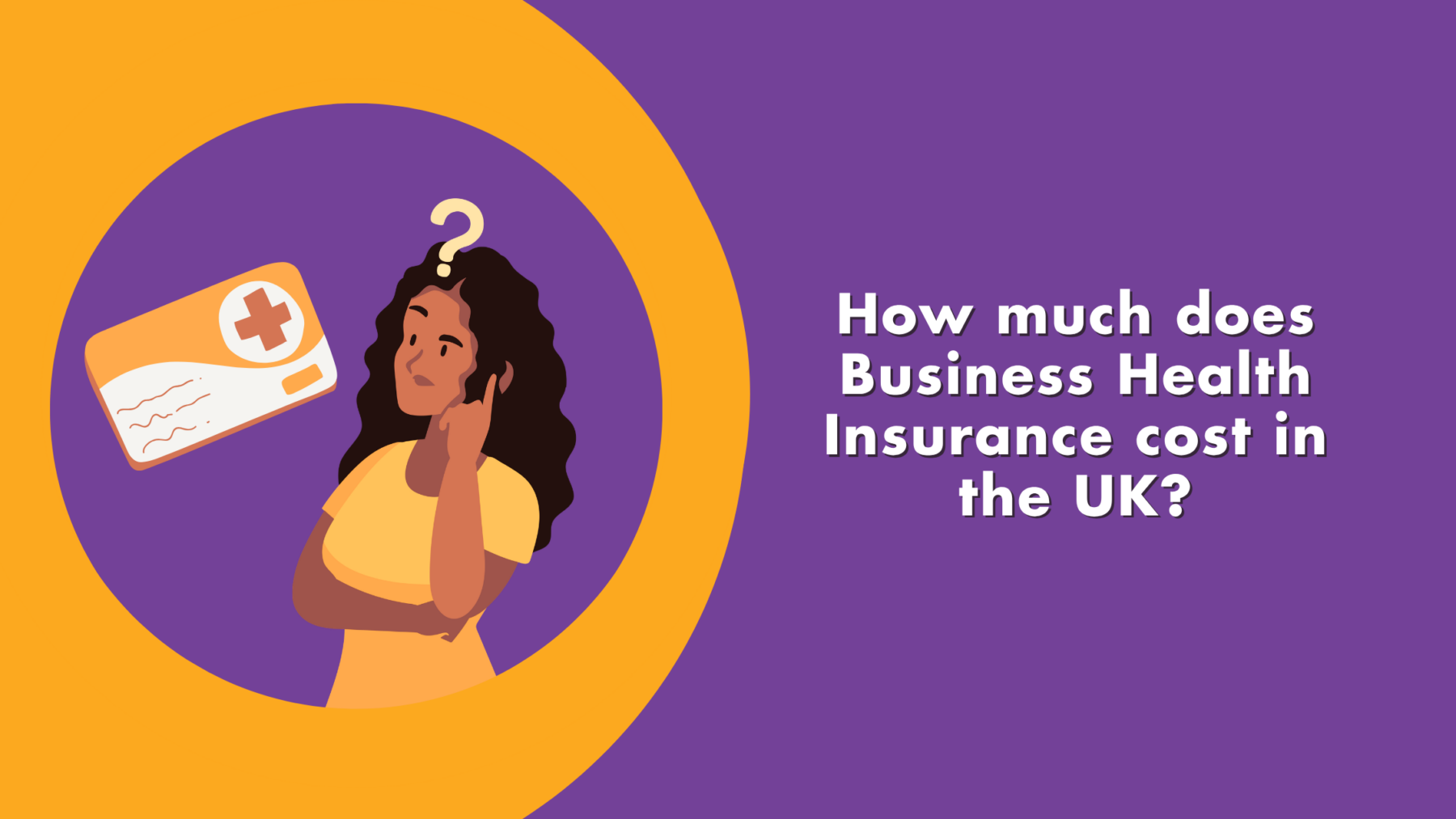
If you’ve started looking into Business Health Insurance for your team, you’ve probably struggled to find a ballpark figure. Nobody will give you even a rough price!
That can be very frustrating. You’re trying to plan a budget, not embark on a research project.
So in this guide, we’ll give you some estimates of what Business Health Insurance actually costs in the UK in 2026. Plus, we’ll look at what factors raise or lower the price and, most importantly, how to make sure you’re not paying more than you need to.
If you’re looking for an accurate quote designed around the needs of your business, then you can request a quote from Hooray – with no obligation to take things further or pay anything for the privilege.
- 1 What does Business Health Insurance typically cost?
- 2 What factors affect the cost of Business Health Insurance?
- 3 Is Business Health Insurance tax deductible?
- 4 Can small businesses afford Business Health Insurance?
- 5 How do you reduce the cost?
- 6 What does it cost NOT to have health insurance?
- 7 How can Hooray Health & Protection help?
- 8 Frequently asked questions
What does Business Health Insurance typically cost?
There’s no single number here, and anyone who gives you one without knowing anything about your business is guessing. But we can give you a realistic sense of the range.
For a small business of around 10 employees, you’re typically looking at somewhere between £500 and £1,500 per employee per year for a standard Business Health Insurance policy. That translates to roughly £40 to £125 per person per month.
The variation is wide and intentional. The factors driving it are explored in the next section.
“The question we get asked most often is ‘how much will it cost?’ The honest answer is that it depends. How many employees do you want to cover? Do you want pre-existing conditions covered? What’s the average age of your employees? These are just a few of the question we need to ask. Once we’ve got the answers, we can give an accurate price very quickly.”
— Charlie Cousins, Director, Hooray Health & Protection
To give you something more concrete, here are some rough illustrative ranges based on our experience placing policies for UK SMEs:
Company of 5 employees, average age 30, standard cover:
£35 – £55 per employee per month
Company of 15 employees, average age 40, mid-level cover:
£55 – £90 per employee per month
Company of 30 employees, average age 45, comprehensive cover:
£80 – £140 per employee per month
These are illustrative prices not quotes. Your actual premium will depend on the factors below.
What factors affect the cost of Business Health Insurance?
Insurers don’t pluck premiums from thin air. They’re carefully calculating risk. Here’s what they look at:
1. The age profile of your workforce
This is the single biggest driver of cost. The older your team on average, the higher the premium. It may sound harsh, but this is because they are statistically more likely to make a claim. A team with an average age of 35 will cost meaningfully less to cover than one averaging 50.
2. The size of your team
More employees means more premium income for the insurer, which actually works in your favour. The cost per person tends to fall as group size increases. A team of 20 will typically pay less per head than a team of 5, for equivalent cover.
3. Your industry and occupation type
Office-based businesses in low-risk sectors tend to attract lower premiums than industries with higher physical demands. Manual trades, construction, and roles involving significant travel will typically cost more.
4. The level of cover you choose
Insurers offer a range of tiers. At the most basic level, you might have inpatient treatment only. But if you add outpatient cover, more comprehensive cancer care, mental health support, physiotherapy and virtual GP, then the premium will rise. Remember, price isn’t everything; you have to think carefully about what your employees will value and actually make use of – and how that might benefit your business.
5. Your chosen excess
Just like with car insurance, you can reduce your premium by agreeing to pay more yourself when a claim is made. An excess of £0 will carry a higher premium than an excess of £250 or £500. This can be a smart way to reduce costs if your team tends to be healthy and claims are infrequent.
6. Hospital list
Comprehensive cover typically gives access to the full network of private hospitals. If you restrict the hospital list for example, excluding central London hospitals where costs are significantly higher will bring down your premium. For teams based outside London, this is often a sensible saving with little practical impact.
7. Underwriting basis
How the insurer treats pre-existing conditions affects the price. Moratorium underwriting (the default for most new policies) excludes conditions from the past five years initially, but doesn’t require disclosure upfront as this tends to be cheaper.
Full medical underwriting requires disclosure but gives certainty from day one. Medical history disregarded is where all conditions are covered regardless of history but commands a significantly higher premium and is usually only available to larger groups.
Is Business Health Insurance tax deductible?
This is one of the most common questions we get, so it’s worth addressing clearly.
The premium is usually an allowable business expense, meaning your company can claim tax relief on it. That’s a genuine saving and makes the real cost lower than the headline figure suggests.
However, this is something many businesses aren’t told upfront, the premium is classed as a Benefit in Kind for your employees. That means each employee will pay income tax on the value of their portion of the premium, and your company will pay Class 1A National Insurance contributions on it. You’ll need to report it on a P11D form.
“One of the things we always do at Hooray is make sure clients understand the tax position before they set a policy up, not after. We’ve taken on schemes from other brokers where employees had no idea they were paying tax on their health insurance. That’s not good for anyone.”
— Charlie Cousins, Director, Hooray Health & Protection
From April 2027, HMRC will require employers to payroll Benefits in Kind, including health insurance premiums directly through payroll, rather than reporting via P11D at year end. If you’re setting up a new policy now, it’s worth factoring this change into how you communicate the benefit to your team.
Can small businesses afford Business Health Insurance?
The short answer is: more often than people think. Health insurance isn’t just for corporate giants with dedicated HR teams and six-figure benefits budgets. The SME market has grown considerably in the last five years, and insurers have responded with more flexible, affordable products aimed squarely at smaller teams.
We regularly arrange cover for companies with as few as two employees. And for businesses that want to offer something meaningful without committing to full private medical insurance, a Business Health Cash Plan which covers everyday needs like dental, optical and physiotherapy can be an excellent and cheaper alternative.
How do you reduce the cost?
There are several legitimate ways to bring the premium down without decreasing the cover:
- Set a sensible excess as even £100–£250 per claim can meaningfully reduce the annual premium
- Restrict the hospital list, particularly if your team isn’t based in London or other high-cost areas
- Adjust the eligibility criteria to covering only permanent employees, or those who’ve completed a qualifying period of service, reduces the number of covered lives
- Review at renewal as premiums rise, but so does your negotiating position. A broker who shops the market at renewal will often find meaningful savings
- Bundle policies because if you have Group Life Insurance or Group Income Protection with the same insurer, you may be able to negotiate a multi-policy discount on your health insurance.
What does it cost NOT to have health insurance?
This question doesn’t get asked often enough. A 2024 study by Vitality found that workplace ill health costs UK employers £138 billion a year in lost productivity and absence. That’s a staggering number and it’s a reminder that the cost of health insurance is only half the equation.
When an employee is waiting weeks or months for an NHS appointment, they may be unwell, distracted, or only partially productive during that time. Private health insurance, at its core, is an absence management tool as much as a healthcare one.
How can Hooray Health & Protection help?
As an independent broker, we compare policies across the whole market, not just one or two insurers. That means you get a genuine picture of what’s available, at what price, with no hidden agenda.
We don’t charge a fee for our service. We’re paid by the insurer, so the premium you pay is the same whether you come through us or go direct. The difference is that you get expert guidance, market comparison, ongoing support and someone who’ll fight your corner at claim time.
“People often don’t believe that using a broker won’t cost them anything extra. They think there’s got to be a snag. But the premium is the same because the insurer’s sales team hasn’t been needed. A broker essentially bypasses that, meaning the insurer simply pays us instead of their sales team. But the experience of setting up the policy and managing it ongoing is completely different. That’s what we’re there for.”
– Charlie Cousins, Director, Hooray Health & Protection
If you’d like a no-obligation quote, or just want someone to talk you through the options, call us on 01273 222805 or email hello@hoorayinsurance.co.uk. There’s no sales pressure and no commitment required.
Frequently asked questions
How much does Business Health Insurance cost for one employee?
For a sole director or single employee, you’d typically be looking at a Relevant Life policy or individual private medical insurance rather than group cover. Individual PMI for one person starts from around £50–£100 per month depending on age and level of cover, though this varies significantly.
Is Business Health Insurance cheaper than personal health insurance?
In most cases, yes group pricing gives you a discount over buying individual policies for each person. And because premiums are paid by the business, you benefit from corporation tax relief on the cost, which reduces the effective outlay further.
Can I only cover some of my employees?
Yes. You can set eligibility criteria for example, covering only full-time employees, or those who have completed a minimum period of service. Your broker can help you design an eligibility structure that balances cost with fairness.
What happens to the cost when employees join or leave?
Policies are typically adjusted on a pro-rata basis when the headcount changes. Additions and removals are managed by your broker throughout the year. At renewal, the premium is recalculated based on your current team.
Usually, yes insurers apply annual increases to reflect medical cost inflation and claims experience. However, a good broker will review the market at renewal and, where appropriate, switch to a more competitive insurer to offset these increases. We do this as standard for all Hooray clients.
Related reading on Hooray Health & Protection:
- 12 ways to save money on Business Health Insurance
- The 7 Best Business Health Insurance Providers in the UK
- What happens when you claim on Business Health Insurance?


![_HPA24 Advice Firm of the Year [YELLOW]](https://hoorayinsurance.co.uk/wp-content/uploads/elementor/thumbs/HPA24-Advice-Firm-of-the-Year-YELLOW-qwfw5zs3ef19fjq6cnwf697rj9gwqbf8o6443qptg0.png "_HPA24 Advice Firm of the Year [YELLOW]")
![_HPA24 Best Small Health Insurance Advice Firm [YELLOW]](https://hoorayinsurance.co.uk/wp-content/uploads/elementor/thumbs/HPA24-Best-Small-Health-Insurance-Advice-Firm-YELLOW-qwfw5yu97kzz3xrji5hslrgaxvljimbic1gmmgr7m8.png "_HPA24 Best Small Health Insurance Advice Firm [YELLOW]")
![_HPA24 Best Sales & Retention Advice Team [YELLOW]](https://hoorayinsurance.co.uk/wp-content/uploads/elementor/thumbs/HPA24-Best-Sales-Retention-Advice-Team-YELLOW-qwfw5yu97kzz3xrji5hslrgaxvljimbic1gmmgr7m8.png "_HPA24 Best Sales & Retention Advice Team [YELLOW]")
![_HPA24 Best Small Protection Advice Firm [YELLOW]](https://hoorayinsurance.co.uk/wp-content/uploads/elementor/thumbs/HPA24-Best-Small-Protection-Advice-Firm-YELLOW-qwfw5zs3ef19fjq6cnwf697rj9gwqbf8o6443qptg0.png "_HPA24 Best Small Protection Advice Firm [YELLOW]")