
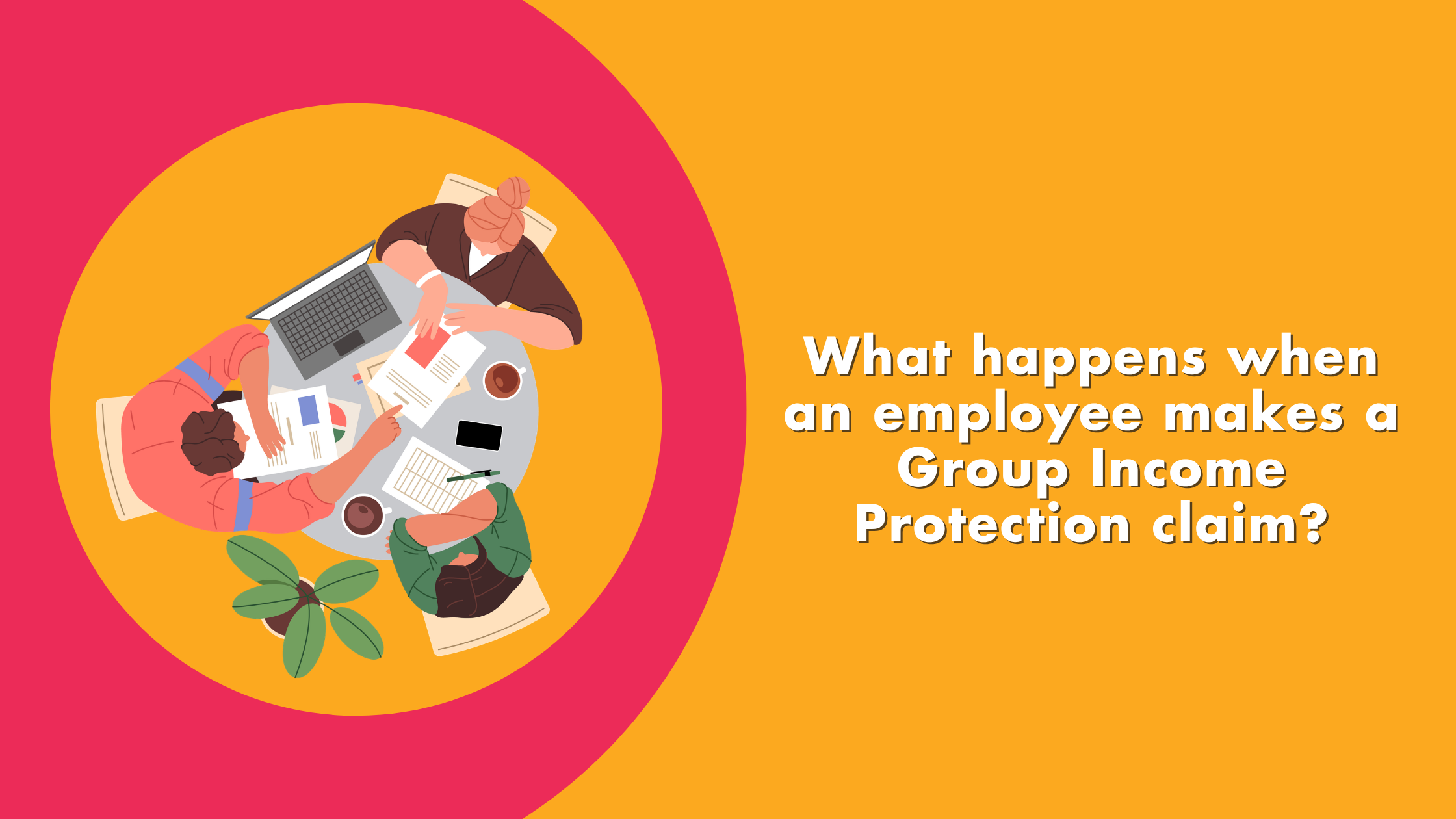
So, you’ve finally arranged Group Income Protection insurance. But do you know what happens when a claim needs to be made?
For most employers, the claims process is alien territory. This guide walks you through every stage, from the first day of absence through to benefit payment and a supported return to work.
Are you thinking of arranging income protection cover for your staff? Arrange a call with one of our friendly advisers to get no-obligation pricing and one-to-one advice.
- 1 When does a Group Income Protection claim begin?
- 2 Step 1: The employer notifies the insurer
- 3 Step 2: The insurer assesses the claim
- 4 The single biggest cause of claim delays
- 5 Step 3: Benefit payments begin
- 6 Step 4: Rehabilitation and early intervention
- 7 Step 5: Return to work
- 8 Pre-claim checklist
- 9 What if a claim is declined?
- 10 How Hooray Health & Protection can help
When does a Group Income Protection claim begin?
The first thing to say is this: Group Income Protection does not pay out from day one of an absence. There’s always a waiting period before the benefit starts – this is known as the deferred period. Common deferred periods are 4, 8, 13, 26 or 52 weeks.
So, if you choose four weeks as your deferred period, this means the income protection cover starts paying out four weeks after your employee was first absent due to sickness.
The deferred period should align with your own sick pay arrangements. If you offer full pay for three months, a 13-week deferred period means the insurer takes over at precisely the point that you stop paying out of your own budget.
But remember to mind the gap!
Gaps between your sick pay ending and the insurer’s benefit starting can leave employees struggling with their finances, so this is worth reviewing carefully when setting up the policy.
If you are unsure whether your deferred period lines up correctly with your sick pay policy, contact the Hooray team and we can check it for you.
Step 1: The employer notifies the insurer
We can’t stress enough how important this is. You must notify the insurer prior to the deferment period coming to an end!
Exact deadlines vary from insurer to insurer so be sure to check your policy documents. Claims can be delayed or declined if you don’t notify the insurer in time.
The notification typically involves providing basic information: the employee’s name, salary, job title, absence start date and the nature of the illness or injury in general terms.
A good broker, like Hooray, can manage this notification process on your behalf.
Remember: Notify your insurer, or ask your broker to do so, as soon as it becomes clear an absence is likely to extend beyond your deferred period. Early notification protects both you and your employee.
Step 2: The insurer assesses the claim
The insurer will begin their assessment as soon as they’ve been notified. They’ll request a medical report from the employee’s GP or consultant, review the job description to assess ability to work, and confirm the absence meets the policy’s definition of incapacity.
Most Group Income Protection policies use one of two definitions:
- Own occupation: the employee cannot perform the duties of their own specific job. This is more generous and is common in employer group schemes, though you should confirm this with your specific policy terms.
- Any occupation: the employee cannot perform any work at all. This is a much higher threshold and less common in group schemes.
The insurer may appoint a case manager. The case manager is a specialist who works with the employee, their medical team and the employer to understand the situation and begin planning for recovery.
The single biggest cause of claim delays
Charlie Cousins, Founding Director at Hooray: In my experience the biggest thing that delays a Group Income Protection claim is the employee not engaging with the insurer. When someone is seriously unwell, speaking to an insurance company is the last thing they want to do. I completely understand that. But not engaging does not just delay the payment – it also prevents the insurer from putting their early intervention and rehab services in place. Those services, whether that is physiotherapy, counselling or a case manager, can genuinely shorten the absence and help the employee recover. The sooner the insurer is involved, the sooner that support starts. If you’re an employer then it’s a good idea to talk to the employee about why it matters to stay in contact as this can make a real difference.
Step 3: Benefit payments begin
If the claim is approved, the insurer begins paying from the end of the deferred period. The benefit is actually paid to the employer who then passes it to the employee through payroll.
These payments are subject to PAYE and National Insurance contributions in the usual way, as they are treated as employment income.
The benefit is typically 50 to 75% of the employee’s pre-absence salary, depending on how the policy was set up. And payment continues for as long as the employee remains unable to work up to the policy’s maximum benefit age or period.
Step 4: Rehabilitation and early intervention
Most modern Group Income Protection policies include rehabilitation services, and these can be accessed from the start of an absence, sometimes before the deferred period has elapsed.
This is one of the most valuable parts of the policy and, in our experience, the most underused.
Services typically include:
- Physiotherapy and occupational therapy for musculoskeletal conditions
- Counselling and CBT for stress, anxiety and depression
- Vocational rehabilitation to help the employee plan a return to work, potentially in a modified or reduced-hours role
- Case manager to coordinate care and work with the employer to help them return to work
Make sure employees and line managers know what support is available from day one of an absence. These services exist to help, and the earlier they are used, the better the outcome tends to be.
Step 5: Return to work
The aim of most Group Income Protection claims is a safe and sustainable return to work where possible. The insurer’s case managers will work with you to develop a realistic plan. A phased return, reduced hours, or a temporarily modified role can all be supported through the policy, with the benefit paid in part alongside the employee’s salary during the transition.
Pre-claim checklist
Before an absence reaches the deferred period, run through the following:
- What is the deferred period on your policy?
- When does the employee’s contractual sick pay end?
- Is there a gap between the two that needs addressing?
- Who is the insurer and what is their claims notification number?
- Has your broker been informed?
- Has the employee been made aware of the rehabilitation services available?
What if a claim is declined?
Claims can be declined if the absence does not meet the policy’s incapacity definition, if the condition is excluded, or if notification deadlines were missed. The employer has the right to appeal, and at Hooray we will support you through that process should it occur.
How Hooray Health & Protection can help
At Hooray, we manage the claims process alongside you, from initial notification through to benefit payments and rehabilitation support.
If you want to review your existing Group Income Protection policy or explore it for the first time, get in touch.
Related reading: Group Income Protection: The Good, The Bad & The Pricing | A Guide to Buying Group Income Protection | Why choose Group Income Protection? | Critical Illness Cover vs Income Protection: What’s your best option?





![_HPA24 Advice Firm of the Year [YELLOW]](https://hoorayinsurance.co.uk/wp-content/uploads/elementor/thumbs/HPA24-Advice-Firm-of-the-Year-YELLOW-qwfw5zs3ef19fjq6cnwf697rj9gwqbf8o6443qptg0.png "_HPA24 Advice Firm of the Year [YELLOW]")
![_HPA24 Best Small Health Insurance Advice Firm [YELLOW]](https://hoorayinsurance.co.uk/wp-content/uploads/elementor/thumbs/HPA24-Best-Small-Health-Insurance-Advice-Firm-YELLOW-qwfw5yu97kzz3xrji5hslrgaxvljimbic1gmmgr7m8.png "_HPA24 Best Small Health Insurance Advice Firm [YELLOW]")
![_HPA24 Best Sales & Retention Advice Team [YELLOW]](https://hoorayinsurance.co.uk/wp-content/uploads/elementor/thumbs/HPA24-Best-Sales-Retention-Advice-Team-YELLOW-qwfw5yu97kzz3xrji5hslrgaxvljimbic1gmmgr7m8.png "_HPA24 Best Sales & Retention Advice Team [YELLOW]")
![_HPA24 Best Small Protection Advice Firm [YELLOW]](https://hoorayinsurance.co.uk/wp-content/uploads/elementor/thumbs/HPA24-Best-Small-Protection-Advice-Firm-YELLOW-qwfw5zs3ef19fjq6cnwf697rj9gwqbf8o6443qptg0.png "_HPA24 Best Small Protection Advice Firm [YELLOW]")