
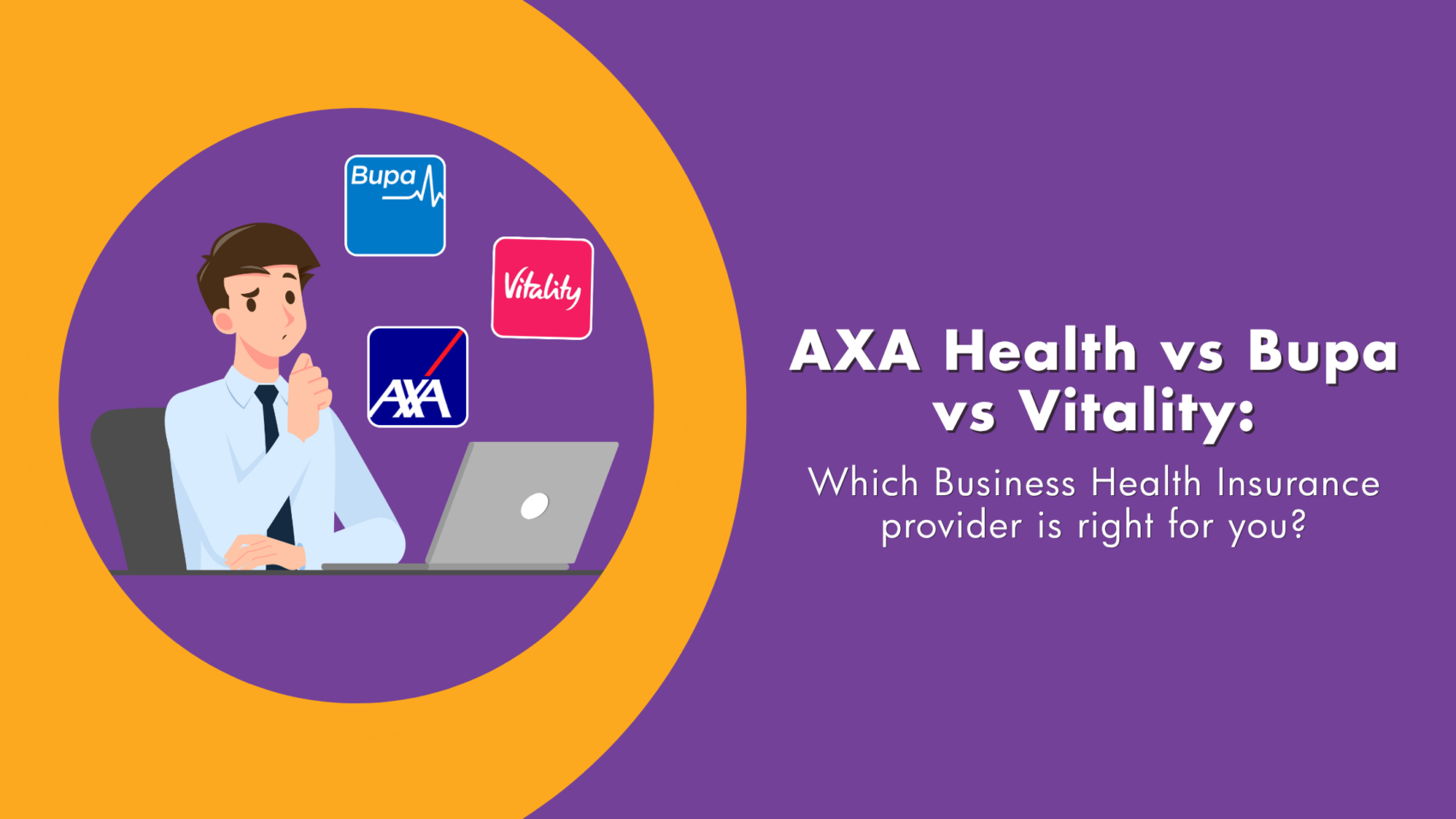
When businesses start looking at Group Health Insurance three names pop up more than any other: Bupa, AXA Health and Vitality. Without doubt these are the best-known providers in the UK market, and usually put smaller providers in the shade.
But being well-known and being the right fit for your business are two different things. The provider that works brilliantly for a fast-growing tech company of 25 people might not be the best choice for a professional services firm of 60.
The coverage, the cost, the added value services and the claims experience all differ, sometimes massively.
As an independent broker, we place policies with all three of these providers and several others. We have no commercial reason to prefer one over another. So in this guide, we’ll give you an honest breakdown of what each provider does well, where they fall short, and crucially who they’re best suited to.
“When a client asks me which of these three is best, my answer is always ‘it depends on your business and your team.’ That might sound like a dodge, but it genuinely is the honest answer.
The right provider for a 40-person law firm is usually different from the right provider for a 15-person marketing agency, even if the cover looks identical on the surface.”
– Charlie Cousins, Founding Director, Hooray Health & Protection
- 1 No bias zone!
- 2 AXA Health: broad coverage, strong cancer care, competitive for SMEs
- 3 Bupa: the gold standard for mental health, the broadest name recognition
- 4 Vitality: the rewards-driven option for health-conscious teams
- 5 AXA Health vs Bupa vs Vitality: quick comparison
- 6 What about other providers?
- 7 How can Hooray Health & Protection help?
- 8 Frequently asked questions
No bias zone!
All three of these providers are ones we regularly recommend and place for businesses. We receive commission from all of them when we arrange a policy, which means we have no incentive to push you towards any specific one.
(Note: our commission does not affect the price you pay – it’s the same amount that the insurer sets aside for their own sales team.)
What we do have an incentive to do is recommend the provider that’s right for your business, because that’s how we retain clients long term. After all, if you have a good experience, you’ll be happy with our recommendation and if not… Well, we’re hardly going to be in your good books!
This article is based on our experience arranging and managing policies with these providers across a range of business sizes and sectors. It doesn’t replace a personalised recommendation but it should help you ask the right questions.
AXA Health: broad coverage, strong cancer care, competitive for SMEs
AXA Health formerly known as AXA PPP Healthcare is one of the most established business health insurance providers in the UK. Their product range covers everything from more basic inpatient-only policies to comprehensive packages with full outpatient cover, cancer care and mental health support.
What AXA Health does well
- Hospital network: AXA offers access to over 250 private hospitals across the UK, which gives employees genuine flexibility in where they’re treated. The breadth of the network is a consistent strength.
- Cancer cover: AXA’s cancer offering is comprehensive. They cover diagnostics, treatment and specialist drugs not routinely available on the NHS. Their cancer pathway is consistently well-regarded.
- Modularity: AXA’s policies are flexible. You can start with a core inpatient policy and add outpatient cover, mental health treatment and physiotherapy as budget allows. This makes them particularly accessible for businesses building a benefits package piece by piece.
- Fast track appointments: AXA includes a fast track appointment service, which can reduce the time between a GP referral and a specialist consultation to days rather than weeks.
- Second medical opinion: for complex diagnoses, AXA offers access to a second opinion service. This is obviously valuable for employees facing serious conditions and uncertain treatment decisions.
Where AXA Health has limitations
- Rewards programme: unlike Vitality, AXA doesn’t operate a behavioural rewards scheme. There’s no incentive structure for healthy living tied to discounts or benefits.
- Mental health depth: AXA’s mental health offering is good, but Bupa’s is generally considered the most comprehensive in the market for breadth of therapeutic options and specialist access.
- Brand recognition with employees: Bupa tends to be the name employees think of when private health insurance is mentioned. Though AXA Health probably makes number two on the list of best known health insurers.
Best for: SMEs wanting flexible cover they can build on, businesses where cancer cover is a priority, teams spread across multiple UK locations who need wide hospital access.
Bupa: the gold standard for mental health, the broadest name recognition
Bupa is arguably the most recognised health insurance brand in the UK and for Group Health Insurance, their reputation has been built primarily on two things: comprehensive mental health coverage and a consistently strong claims service. Their business health insurance range covers companies from sole directors upwards.
What Bupa does well
- Mental health: this is arguably Bupa’s strongest card. They cover a wider range of conditions, have more therapists in their network, and even cover alcohol and substance abuse which every other insurer declines. For businesses where employee mental health is a priority, Bupa is consistently the recommendation.
- Out-patient cover: Bupa’s out-patient cover is comprehensive and includes physiotherapy, consultations and diagnostic tests without the waiting and referral friction that some policies introduce.
- Hospital choice: Bupa’s network includes over 500 facilities including their own hospitals. Employees can often see a GP or consultant of their choice, which matters to people who’ve built relationships with specific practitioners.
- Claims reputation: we consistently see Bupa’s claims process handled efficiently. For clients who’ve made a claim, the experience tends to be straightforward, which is ultimately what the policy is for.
- Virtual GP: Bupa’s virtual GP service is integrated and well-regarded, allowing employees to see a doctor quickly without waiting for an appointment.
Where Bupa has limitations
- Cost: Bupa tends to be positioned at the premium end of the market. For cost-conscious SMEs, the premium gap between Bupa and an equivalent AXA or Aviva policy can be steep.
- No rewards programme: like AXA, Bupa doesn’t offer a behavioural incentives model. If you want to encourage healthy behaviours alongside healthcare coverage, Vitality has the edge here.
- Less flexibility on smaller teams: while Bupa does cover small businesses, some of their best pricing and product options are more accessible to larger groups.
“Bupa is the one I recommend most when a business tells me that mental health support is a non-negotiable. Their offering in that area genuinely stands out against the rest of the market. For a lot of businesses, that’s the whole conversation.”
– Charlie Cousins, Founding Director, Hooray Health & Protection
Best for: Businesses where mental health is a central concern, sectors with high stress or burnout risk, employers who want the reassurance of the most recognised brand and the most comprehensive offering.
Vitality: the rewards-driven option for health-conscious teams
Vitality takes a rather different approach to Business Health Insurance. Where AXA and Bupa are primarily reactive, covering treatment when something goes wrong. Vitality is designed to encourage healthy behaviours and reward employees for maintaining them. It’s the most unique product of the three.
What Vitality does well
- The rewards programme: this is Vitality’s signature offering. Employees earn points for healthy activities — exercising, completing health assessments, hitting step targets and redeem them for tangible benefits: discounted gym memberships, cinema tickets, coffee, tech discounts and more. For younger, health-conscious teams this really increases interest and ultimately engagement.
- Virtual GP: Vitality’s GP app is one of the slickest in the market. Employees can book a virtual appointment within 48 hours and access prescriptions digitally. For businesses where speed and convenience matter, this is a real draw.
- Cancer cover: Vitality covers the latest cancer treatments and diagnostic screenings. Their cancer pathway includes access to drugs not routinely available on the NHS and options for preventative care.
- Mental health: Vitality includes self-referral to talking therapies and access to Headspace as part of their core cover. Solid, though not at the depth of Bupa’s offering.
- Healthy Mind programme: Vitality’s approach to mental health goes beyond reactive treatment. Their Healthy Mind initiative includes mental health risk assessments and tools designed to catch problems before they escalate.
- Pricing: Vitality’s pricing can be very competitive, particularly for younger workforces. The healthier the team’s claimed behaviours, the lower the renewal premium in theory.
Where Vitality has limitations
- The rewards model requires engagement: Vitality’s differentiation only works if employees actively use the app and track their healthy behaviours. For teams who won’t engage with the rewards element, the incentive to choose Vitality over a simpler policy weakens.
- Admin overhead: managing a Vitality scheme, particularly the rewards structure, involves more ongoing administration than a standard policy. For small businesses without dedicated HR resource, this can be a consideration.
- Older or less digitally engaged teams: the rewards programme is going to most useful for employees who’ll use a smartphone app regularly. For older workforces or those less engaged with digital tools, the core policy may not be as attractive.
“Vitality works really well for the right company. It often works well for tech businesses, creative agencies and companies with a strong wellbeing culture. But we’ve also placed Vitality with businesses where the rewards element was barely used, and for them it wasn’t the right fit. The honest conversation upfront saves problems later.”
– Charlie Cousins, Founding Director, Hooray Health & Protection
Best for: Younger workforces, businesses with a strong wellbeing culture, tech companies and creative agencies, employers who want health insurance to actively encourage healthier habits rather than just pay for treatment.
AXA Health vs Bupa vs Vitality: quick comparison
The table below summarises the key differences across the three providers at a glance. This is a simplified overview — speak to us for a personalised recommendation.
| Provider | Min. employees | Hospital network | Mental health | Virtual GP | Rewards programme | Cancer cover | Best for |
|---|---|---|---|---|---|---|---|
| AXA Health | 1 | 250+ | Good | Yes | No | Strong | SMEs wanting broad hospital choice & cancer cover |
| Bupa | 2 | 500+ | Excellent | Yes | No | Excellent | Mental health focus & comprehensive out-patient |
| Vitality | 1 | 250+ | Good | Yes | Yes | Strong | Healthy, younger teams motivated by rewards |
Note: Hospital network sizes, product features and eligibility criteria may change. Speak to Hooray for current, accurate information.
“Most clients come to us having already decided they want ‘Bupa or something similar’ because Bupa is the name they know. And sometimes that’s exactly right. But when we go through the specifics of their team, average age, what they actually want covered, then the recommendation is often different from what they came in expecting.”
– Charlie Cousins, Founding Director, Hooray Health & Protection
What about other providers?
AXA Health, Bupa and Vitality are three of the most established names in UK Business Health Insurance, but they’re not the only strong options. Aviva, WPA, Freedom Health and Cigna all offer compelling products and may be a better fit depending on your circumstances, particularly for specific team profiles or budget requirements.
As an independent broker, we compare across the whole market. Our recommendation will always be based on what’s right for your business, not which insurer we happen to have a preferred relationship with. We don’t have preferred insurer relationships!
How can Hooray Health & Protection help?
We arrange Business Health Insurance for UK companies ranging from two employees to several hundred. Our process is straightforward: we learn about your business, compare policies across the whole market, and deliver a recommendation with no obligation to proceed.
There’s no fee for our service as we’re paid by the insurer, so the premium you pay is the same whether you come through us or go direct. The difference is the advice, the comparison, and the ongoing support.
To get started, call us on 01273 222805 or email hello@hoorayinsurance.co.uk. No pressure, no jargon!
Frequently asked questions
Is Bupa or AXA better for Business Health Insurance?
Neither is universally better it depends on your priorities. Bupa has the edge for mental health coverage and breadth of out-patient support. AXA Health is often more competitively priced for SMEs and offers strong cancer care and hospital choice. An independent broker will help you identify which is the better fit for your team.
Is Vitality Business Health Insurance good?
Yes, for the right team. Vitality works particularly well for younger, health-conscious and digitally engaged workforces who will actively use the rewards programme. For teams less likely to engage with the app-based incentives, a simpler policy from AXA or Bupa may offer better value.
Which Business Health Insurance provider has the best mental health cover?
Bupa consistently leads the market for mental health coverage. Their Business Mental Health Advantage product is more comprehensive than most, covering a wider range of conditions and providing access to a larger network of therapists. Vitality and AXA both offer solid mental health options as part of broader policies.
Can I switch providers mid-year?
In most cases, mid-term cancellation incurs a fee and requires careful management to ensure continuity of cover. Most switches happen at renewal, which is when a broker will review the market and recommend whether staying or switching makes financial sense.
Will using a broker cost me more than going direct?
It shouldn’t do, but unfortunately some brokers do charge a fee. In the case of a broker like Hooray, we are paid by the insurer via commission, which means the premium you pay is the same whether you come through a broker or arrange the policy directly. The advantage of a broker is that you get market-wide comparison and independent advice as part of the same transaction.
Related reading on Hooray Health & Protection:
- Compare Business Health Insurance — free quotes
- The 7 Best Business Health Insurance Providers in the UK [2026]
- How Much Does Business Health Insurance Cost in the UK? [2026 Guide]
- What Does Business Health Insurance Actually Cover?





![_HPA24 Advice Firm of the Year [YELLOW]](https://hoorayinsurance.co.uk/wp-content/uploads/elementor/thumbs/HPA24-Advice-Firm-of-the-Year-YELLOW-qwfw5zs3ef19fjq6cnwf697rj9gwqbf8o6443qptg0.png "_HPA24 Advice Firm of the Year [YELLOW]")
![_HPA24 Best Small Health Insurance Advice Firm [YELLOW]](https://hoorayinsurance.co.uk/wp-content/uploads/elementor/thumbs/HPA24-Best-Small-Health-Insurance-Advice-Firm-YELLOW-qwfw5yu97kzz3xrji5hslrgaxvljimbic1gmmgr7m8.png "_HPA24 Best Small Health Insurance Advice Firm [YELLOW]")
![_HPA24 Best Sales & Retention Advice Team [YELLOW]](https://hoorayinsurance.co.uk/wp-content/uploads/elementor/thumbs/HPA24-Best-Sales-Retention-Advice-Team-YELLOW-qwfw5yu97kzz3xrji5hslrgaxvljimbic1gmmgr7m8.png "_HPA24 Best Sales & Retention Advice Team [YELLOW]")
![_HPA24 Best Small Protection Advice Firm [YELLOW]](https://hoorayinsurance.co.uk/wp-content/uploads/elementor/thumbs/HPA24-Best-Small-Protection-Advice-Firm-YELLOW-qwfw5zs3ef19fjq6cnwf697rj9gwqbf8o6443qptg0.png "_HPA24 Best Small Protection Advice Firm [YELLOW]")